
Klimatise: an employee feedback tool for smarter, more sustainable office comfort.
Insight-led redesign, making temperature feedback effortless and engaging.
Impacting user retention and smarter outcomes.
Client Testimonial
“Amy worked with Klimatise for a month-long project as a UX/UI designer. We were lucky to have Amy work on a user feedback app for people in offices to tell us how they feel. Amy quickly got up to speed on the subject area and did a brand review for us. Her main piece of work was a piece of thoughtful user research, which delved into the experience of users and what service they would want.
She then delivered a range of wire frames for us to discuss options before producing two options of a beautiful and simple app design that exceeded our expectations.
Amy works incredibly quickly and efficiently, she delivered so much in our one month project. She is also great to work with - she is very personable, is collaborative and uses feedback, and is flexible in her approach. We love the design and can’t wait to work with Amy again.”
- Dr Victoria Tink - Co-founder and CTO of Klimatise
Project Type
Redesign of an employee temperature feedback web tool, UX research & end-to-end product design.
Project Impact
Grounded in user insight, the design turns temperature feedback into a simple, one step action that boosts engagement and user trust.
Role & Duration
Lead UX designer / Product Designer, collaborating with Product Manager / CTO and CEO.
4 week project.
Tools
Figma
Canva
Miro
The Challenge
The users
Employees working in large office buildings who often experience discomfort from inconsistent indoor temperatures that affect their focus, well being, and productivity.
Klimatise employed me to redesign their current, location specific temperature feedback tool. It needed to be accessible, user friendly and frictionless to promote long term user engagement.
The product
‘Human Thermostat’ is a feedback feature designed for Klimatise, a company focused on decarbonising commercial real estate. The tool enables employees to quickly and effortlessly report how hot or cold they feel, giving building managers real time, human centred insights to optimise indoor climates more efficiently and sustainably.


The Discovery
The research combined user interviews, a literature review on thermal comfort, and a market scan of existing building feedback tools.
Our goals were to understand how people currently report temperature issues, what prevents them from doing so, and what motivates them to keep participating over time.
Key Findings
We found that people engage when reporting is instant, anonymous, and visibly acknowledged, and that existing systems fail because feedback feels slow, unclear, and disconnected from any visible outcome insights that directly shaped the design of a simple, transparent QR code experience.
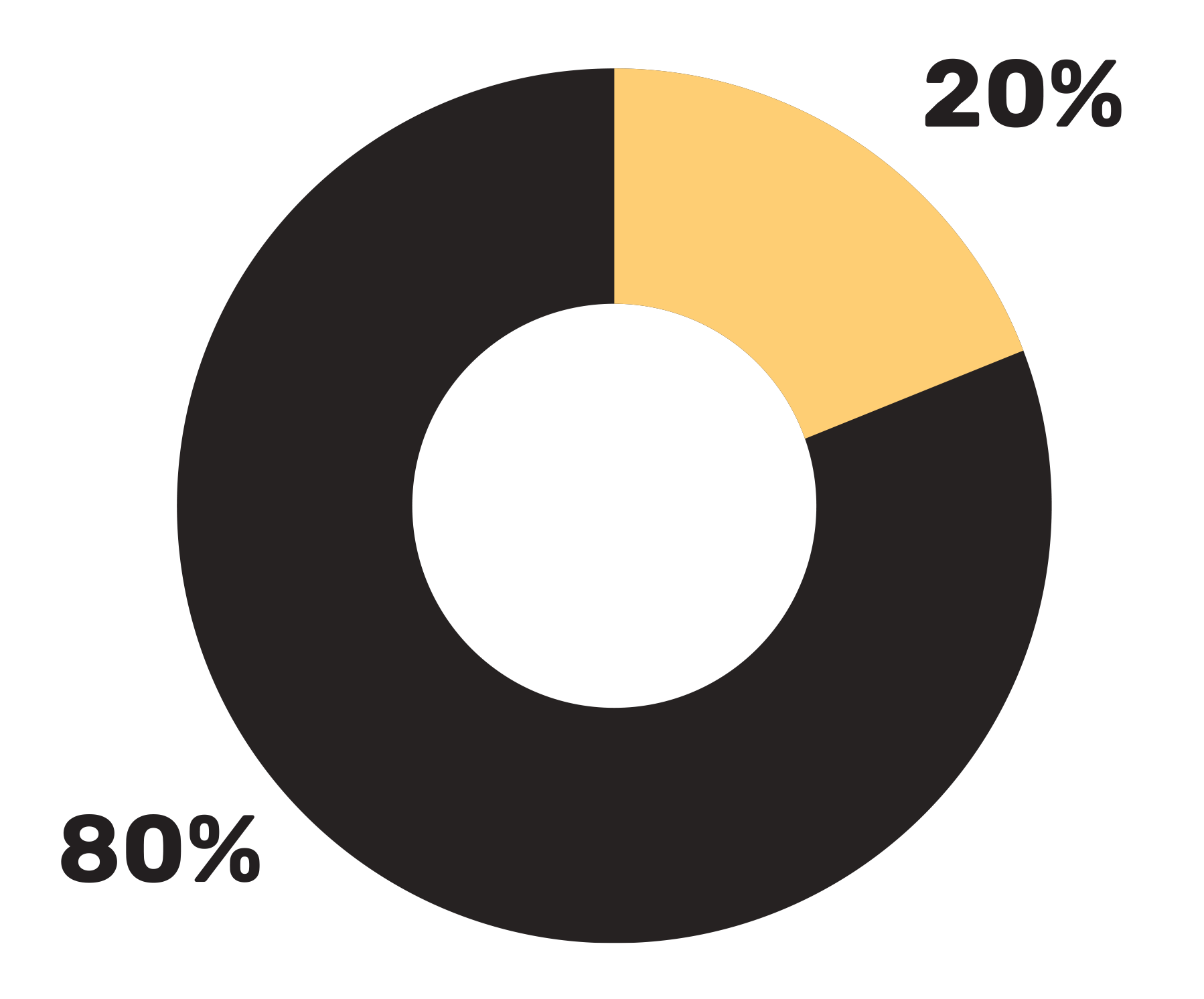
80% of participants said reporting temperature discomfort feels inconvenient, uncomfortable, or unclear. Highlighting a strong need for anonymous feedback options.
80% of participants wanted clear confirmation that their feedback is received and acted on, to build trust and encourage ongoing use of the feature.

100% of participants wanted a quick, low effort way to report temperature discomfort, preferring sliders or multiple choice over traditional survey forms.
80% of participants reported they are more motivated to engage when they see relatable environmental metrics like CO2 saved, houses powered or trees planted.
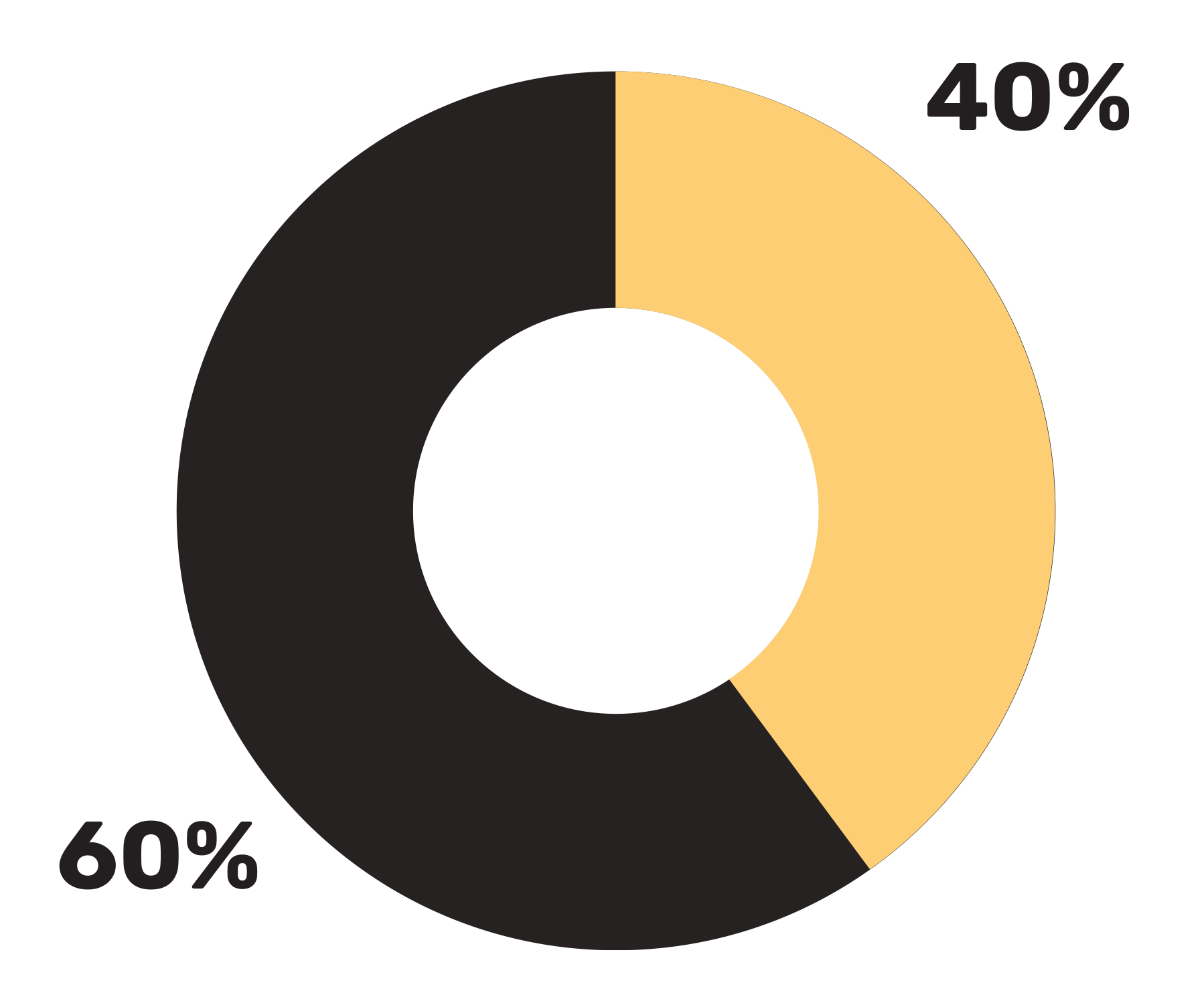
60% of participants preferred using a QR code, finding it easy and accessible since they always have their phones, though two expressed hesitation due to mixing work and personal devices.
Define
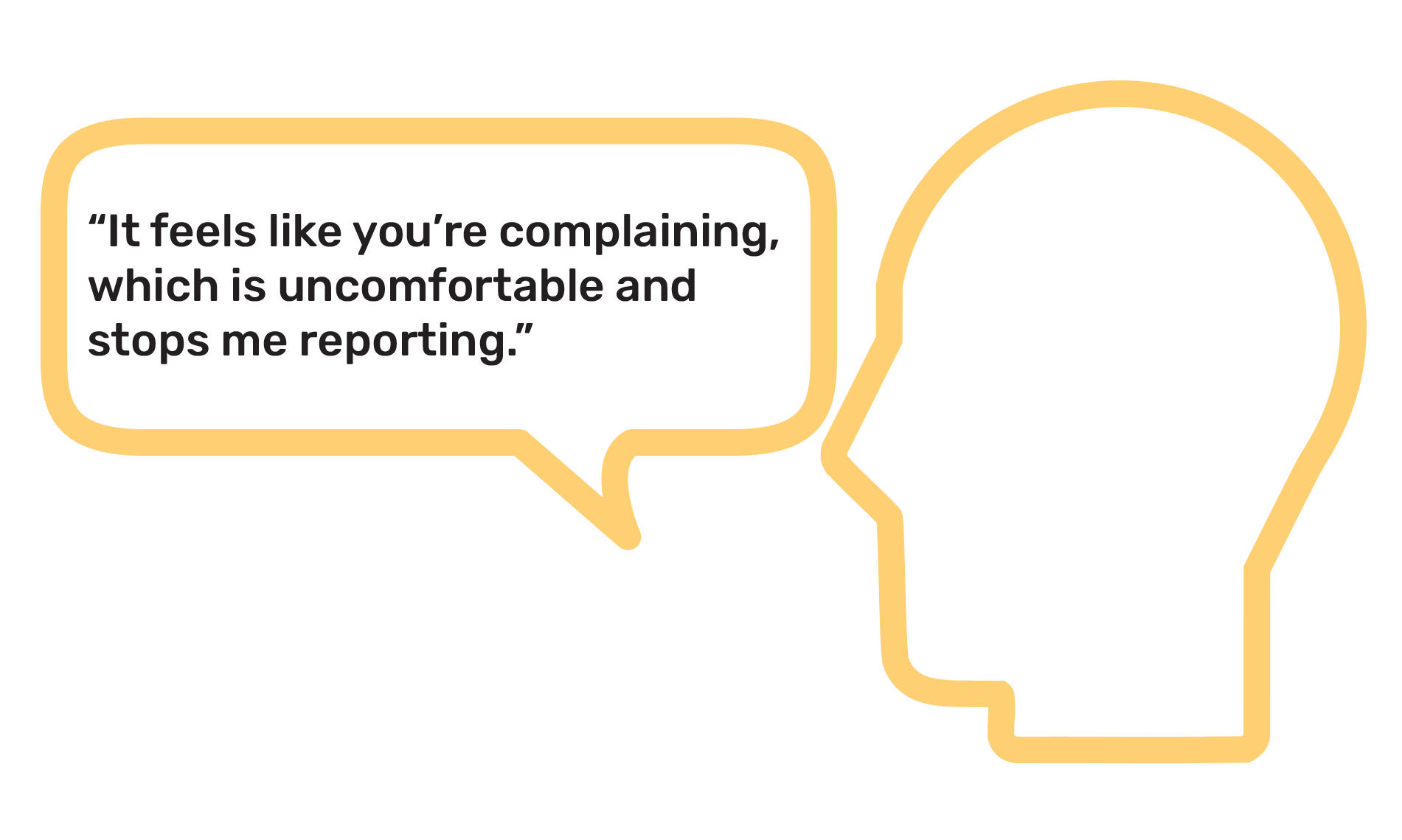
Research showed that people often feel too hot or too cold at work but don’t report it because the process is unclear, slow, and they don’t believe anything will happen.
Key pain points
1) Not knowing where to complain.

2) Not wanting to be seen as “difficult”.

3) Never getting acknowledgement after raising an issue.

From this, two core user types emerged:
1) People who have given up reporting because it never leads to visible change.
2) People who still try to get comfortable but find the process high effort and inconsistent. Their journey typically stops at the point of “it’s not worth it,” which means the problem persists.
Problem Statement
Office workers often experience uncomfortable temperatures but find current feedback systems inconvenient and unclear, leading to frustration and low engagement.
They need a fast, simple, and anonymous way to report discomfort, with transparent communication on how their feedback affects temperature adjustments.
Providing localised insights and flexible access will build trust and improve overall user experience.
Ideate
I began with rapid brainstorming, sketching, and a ‘How might we?’ workshop with the product lead to collaboratively turn research insights into ideas.
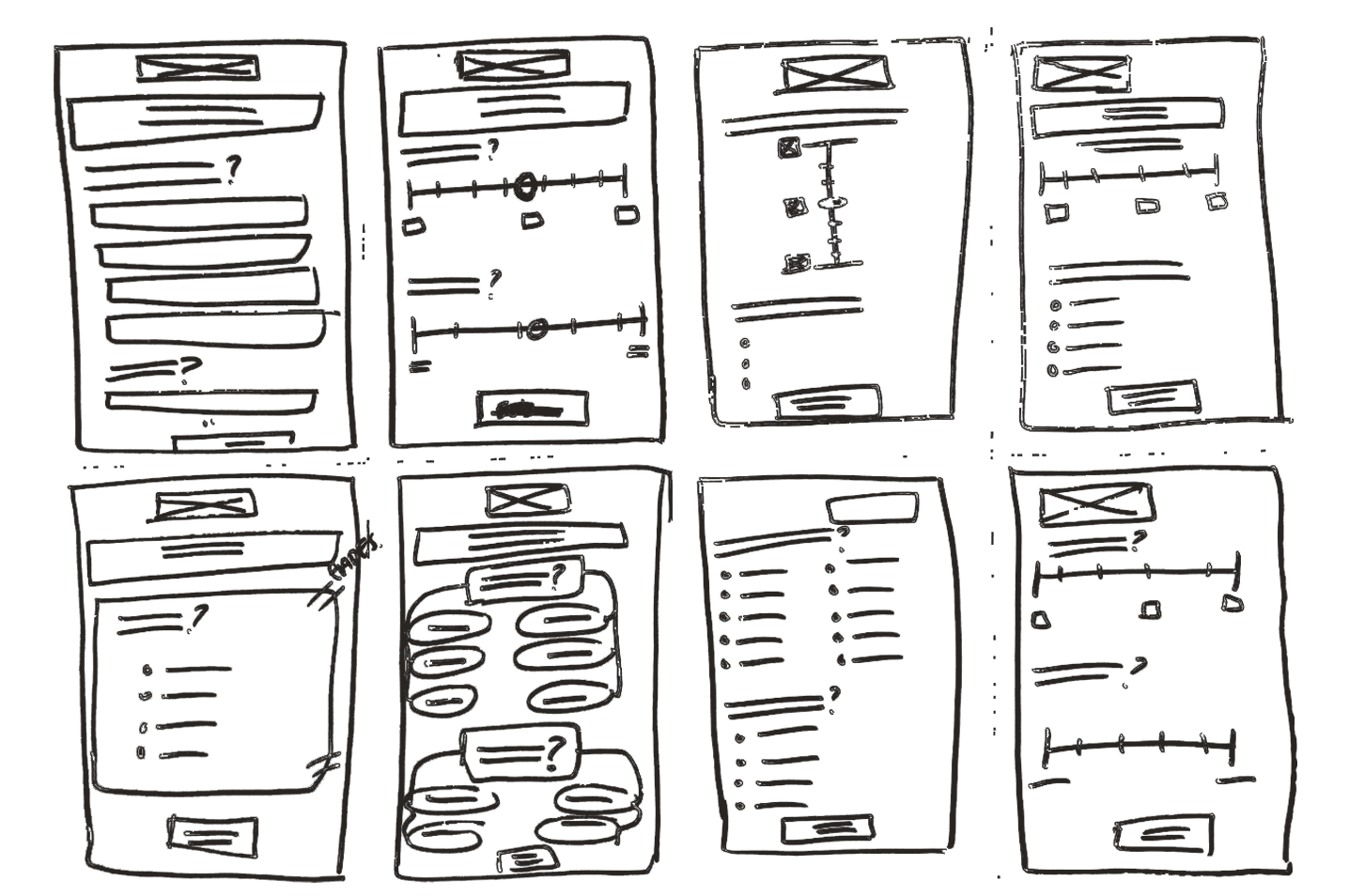
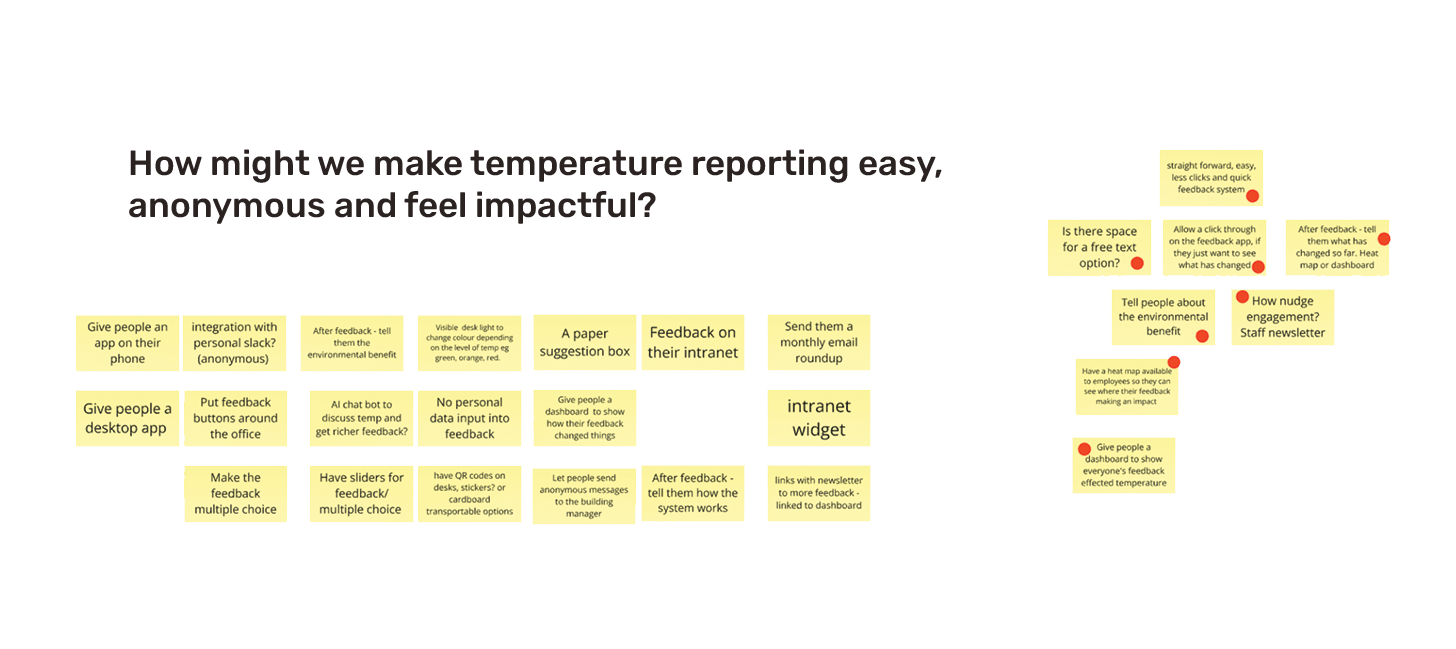
We explored multiple ideas and a clear pattern emerged.
Simplicity drives repeated use.
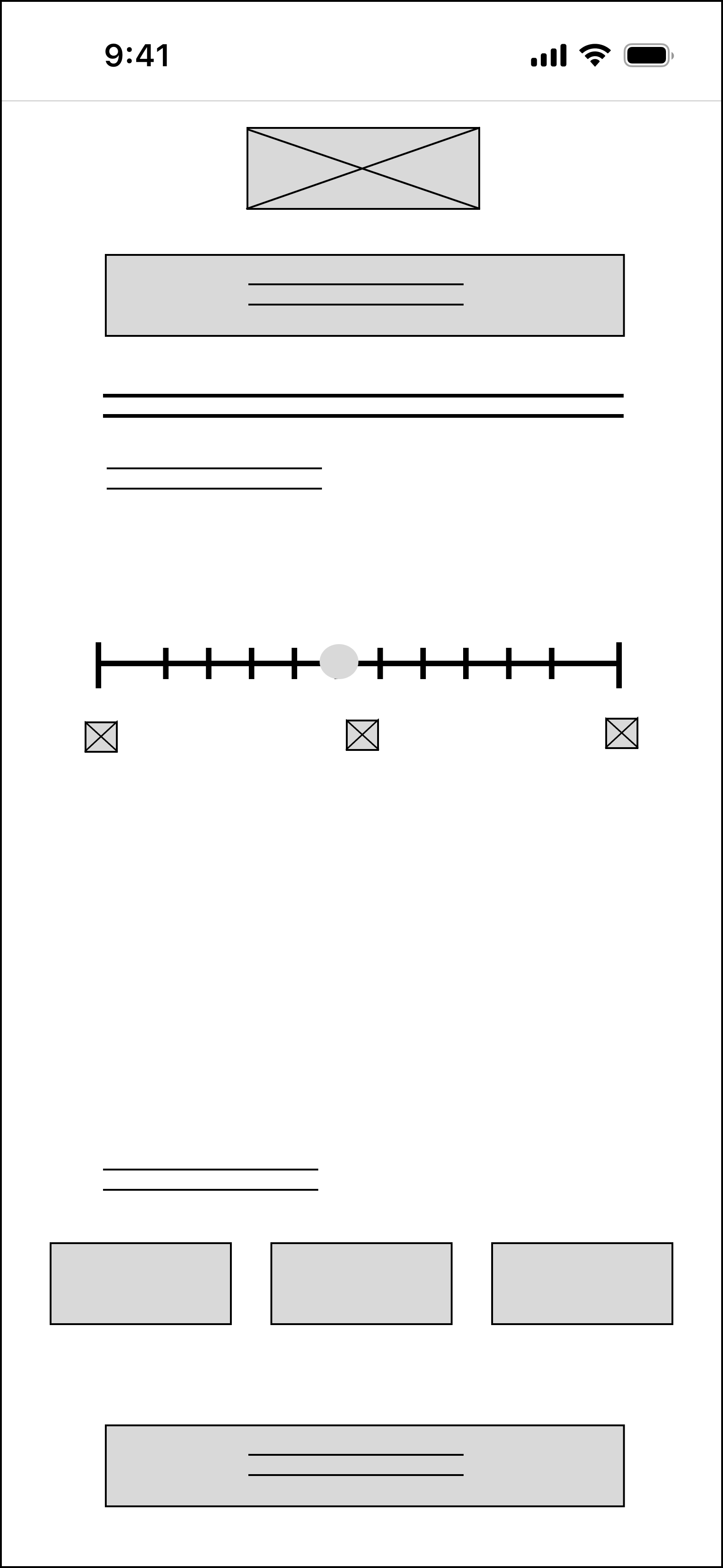
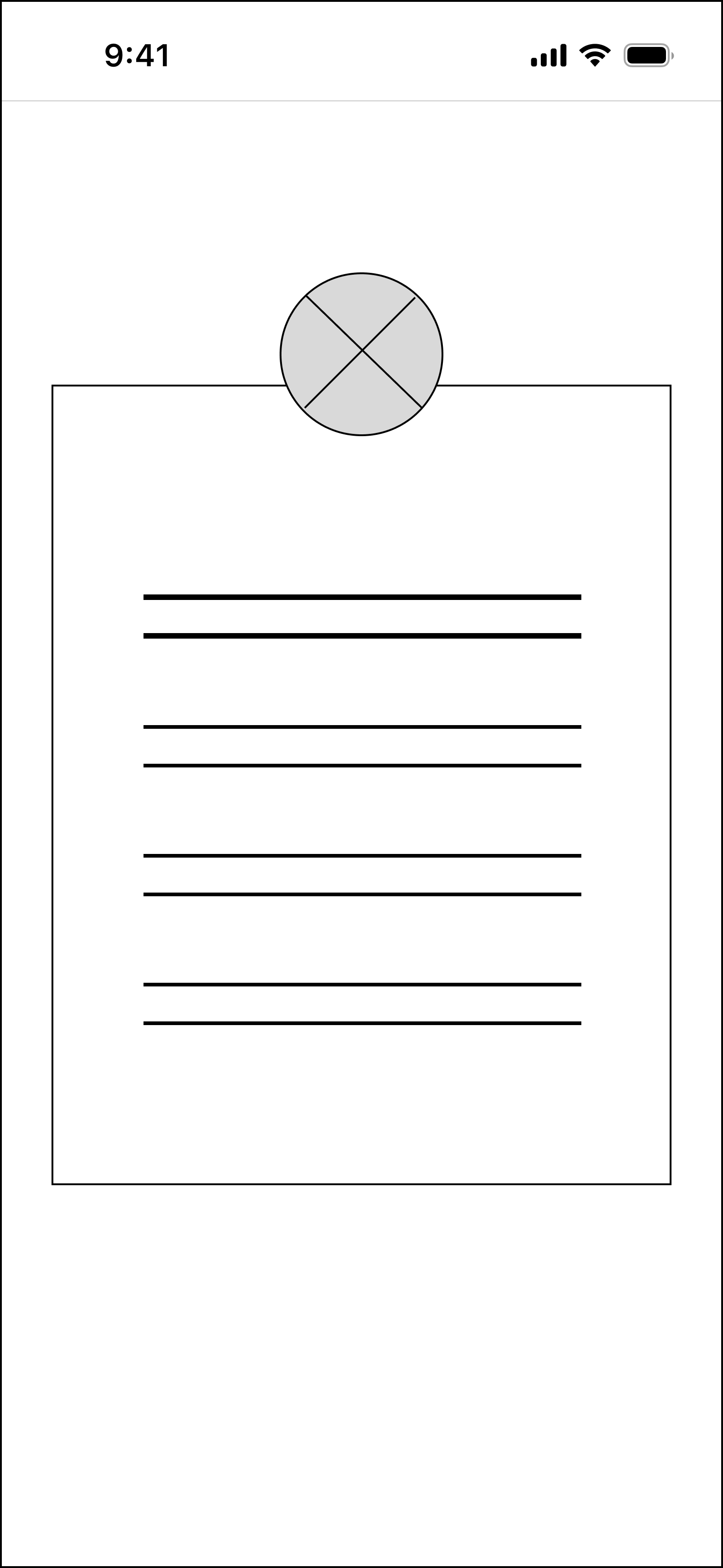
Lo-Fi Wireframes



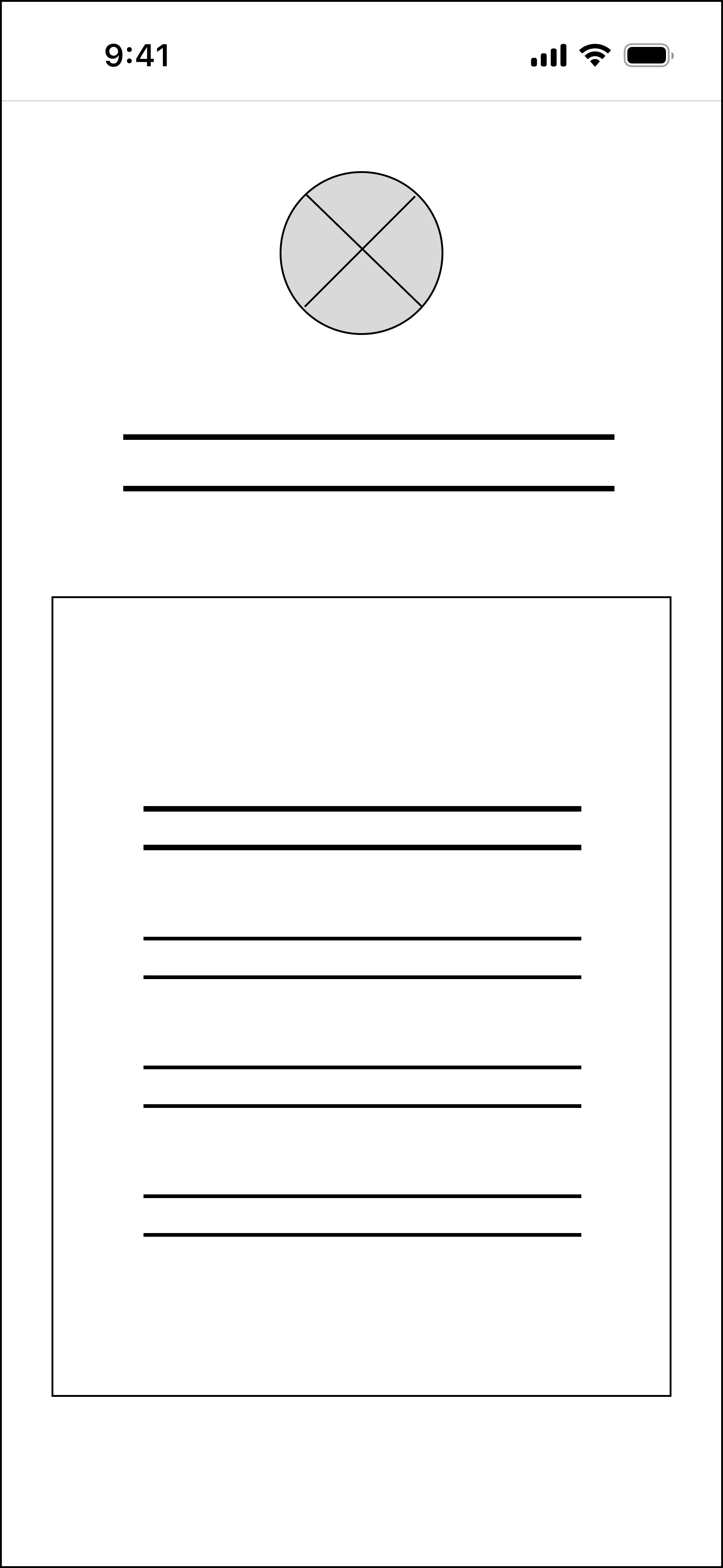
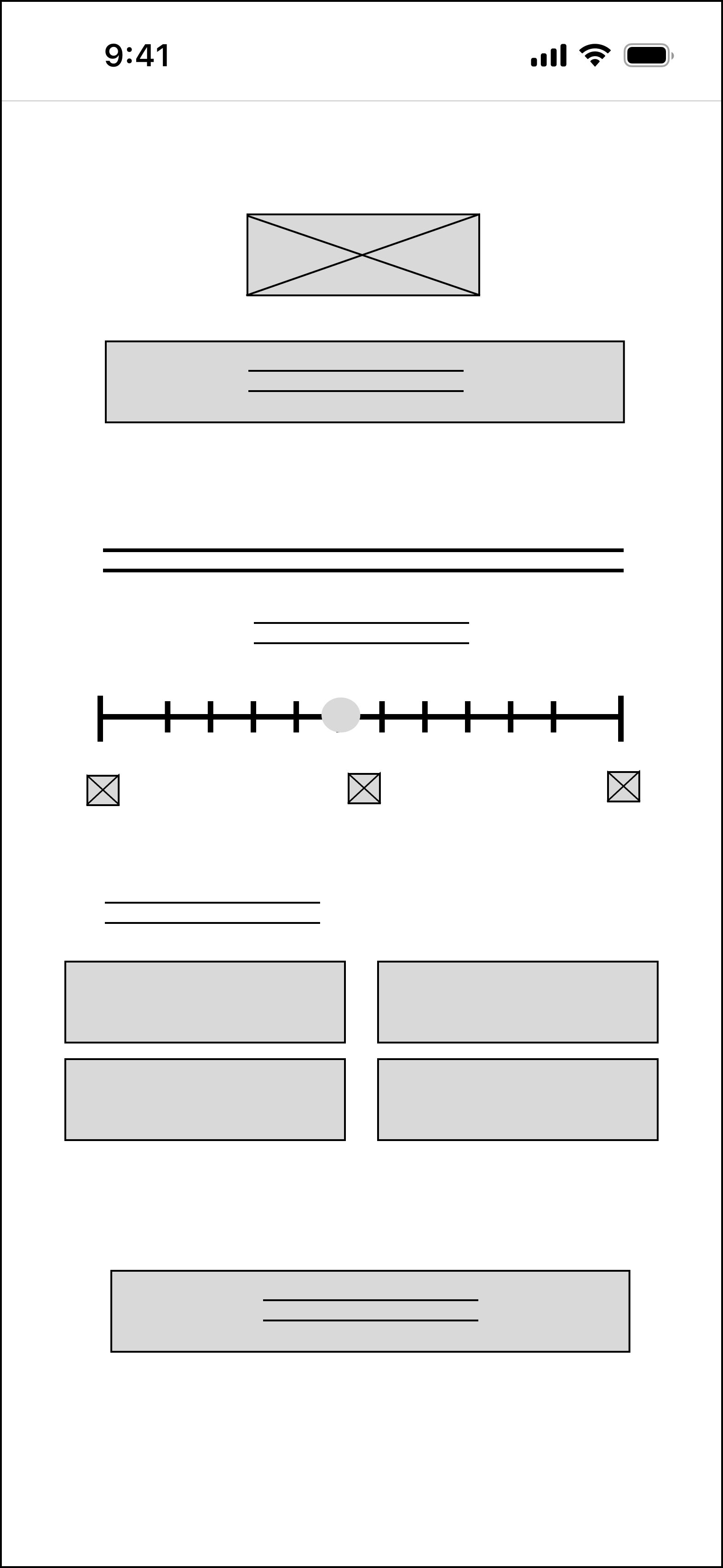
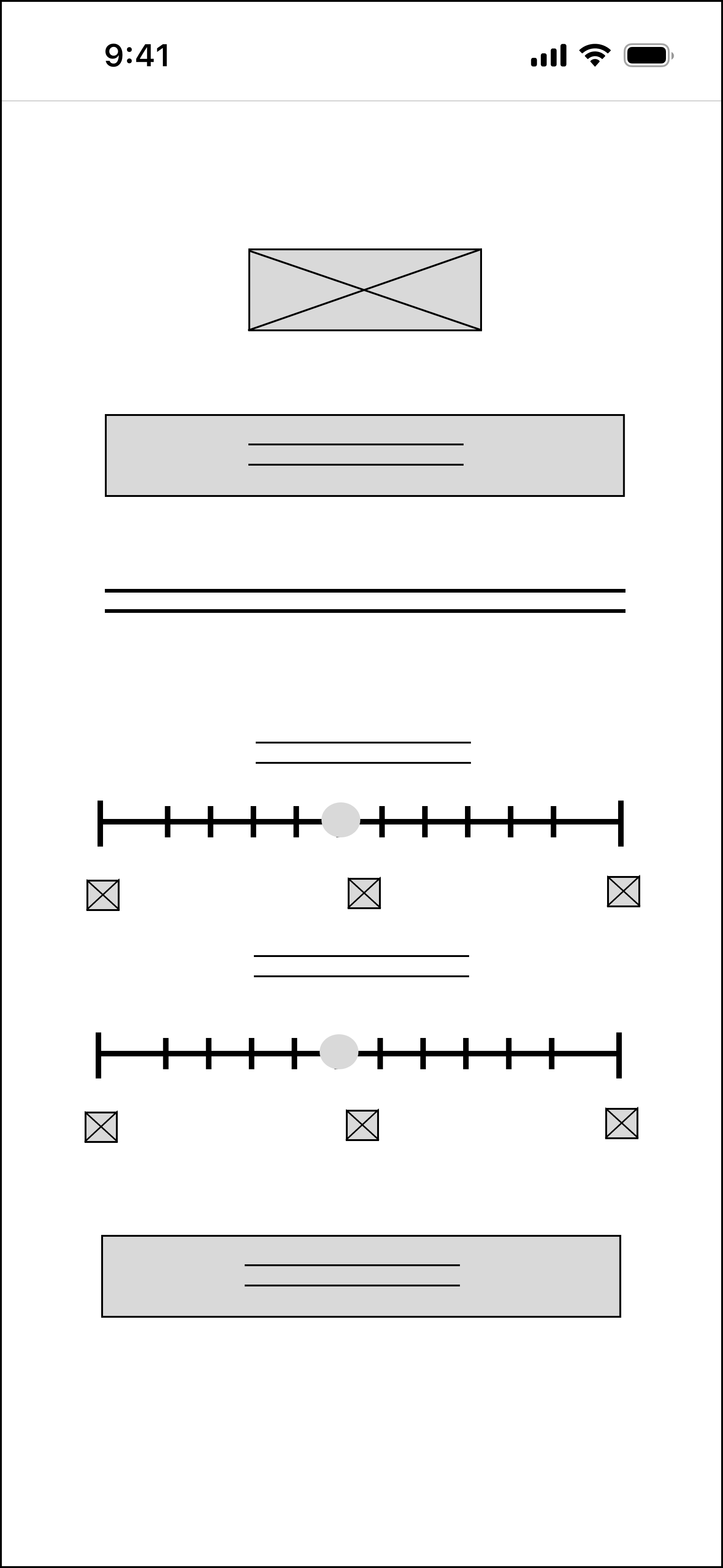
The Solution and Final Designs
With a limited timeline, we focused on strong early research and close collaboration with the Product lead/ CTO and CEO to refine the design and ensure it aligned with Klimatise’s vision, with final testing scheduled for a later stage.
All colours were contrast checked to meet accessibility guidelines, language was supportive and inclusive, and positive confirmation messages were added to reinforce trust and make participation feel meaningful.
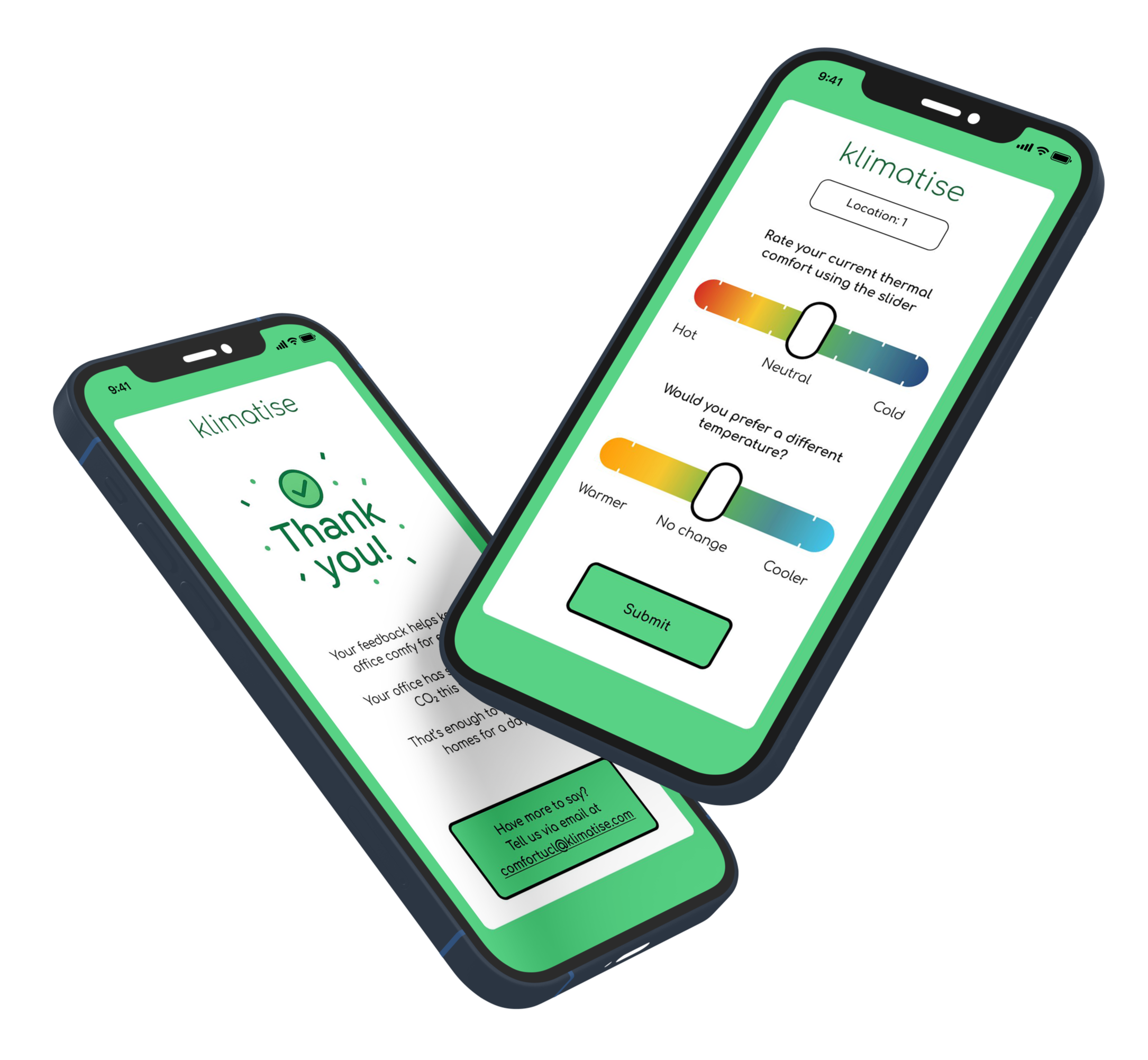
Research showed users wanted a fast, simple flow, so the redesign adopted an effortless scan → slide → submit model with no scrolling, minimal text, and a large slider and submit button.
A brief confirmation screen was included to close the loop, build transparency, and reflect users’ desire for eco impact awareness.
Old design
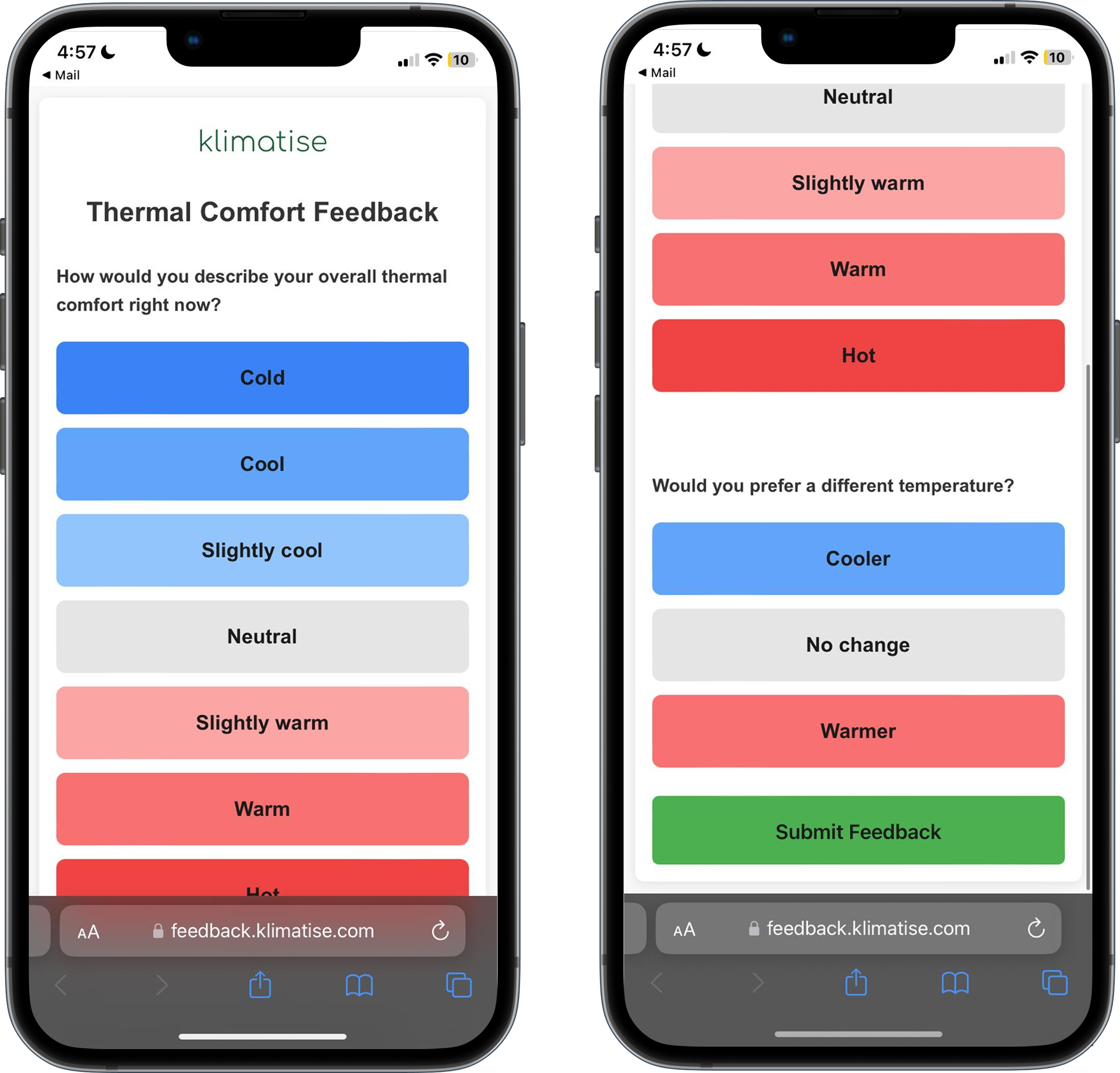
New design
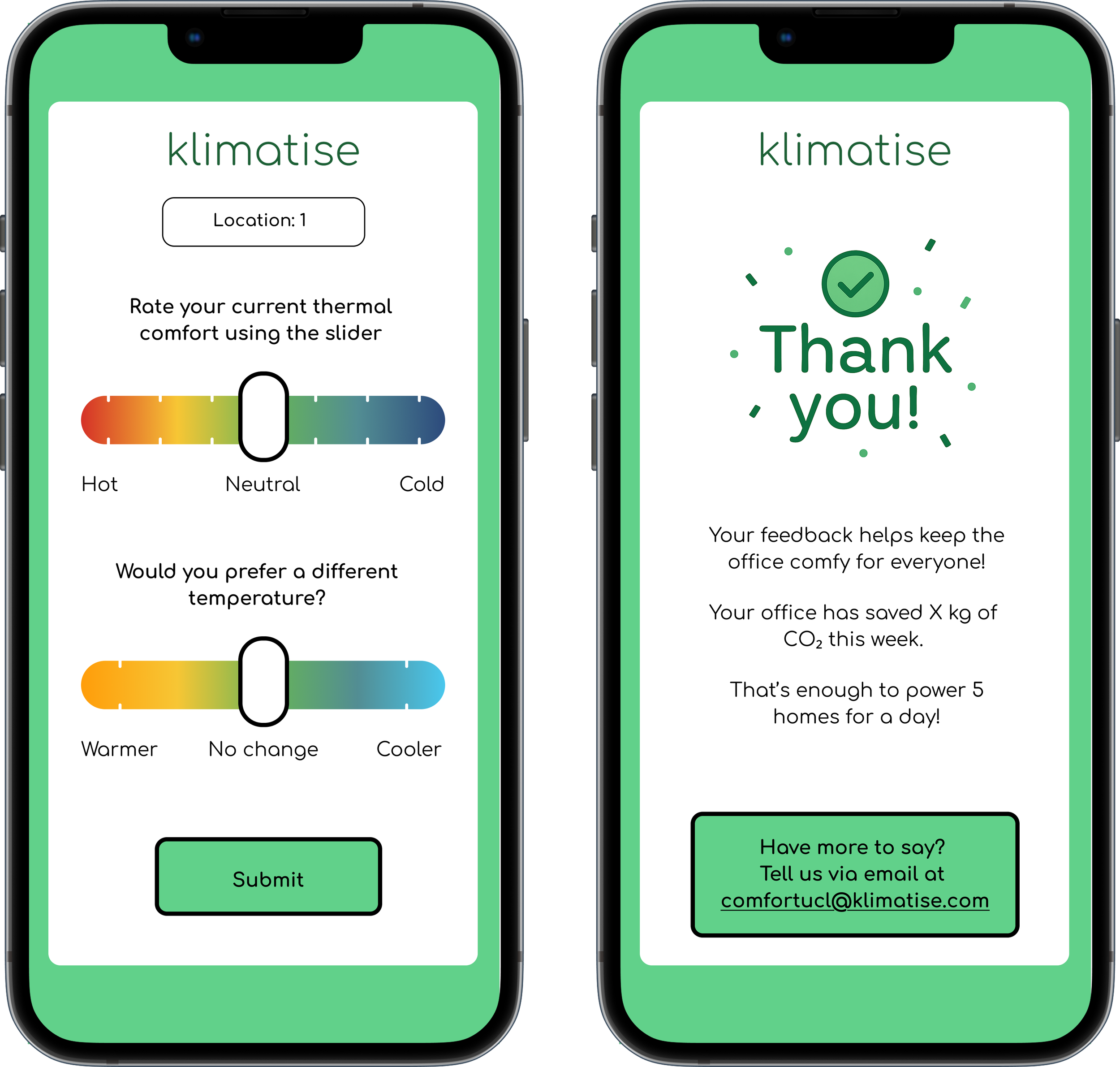
With design principles focused on keeping it minimal, making the main action obvious, using consistent “thermometer” visuals red→green→blue, stacking content cleanly, and giving instant visual feedback as the slider moves.
Overall, we simplified the interface and language, removed scrolling to reduce confusion and taps, and refined the thermal comfort scale to deliver an intuitive, accessible, and research-led solution.
Conclusion
I delivered a focused, research backed hi-fi prototype (scan QR → slide → submit.)
In early research discussions, people consistently gravitated toward a slider and said they wanted something they could complete in “five seconds,” and many indicated they would return to submit again if they received confirmation and updates on eco impact, signalling trust and simplicity were key motivators. The team did note potential dexterity concerns with sliders, so although confidence in the pattern was high, this interaction would be important to test once launched.
The result turns quick taps into precise, location based comfort signals that can drive targeted building adjustments rather than blanket temperature changes.
Biggest takeaway: Clarity beats control, fewer steps and a visible “what happens next” mattered more than extra input options. Next, I’d pilot the tool on one floor to monitor adoption, repeat use, slider usability, and hotspot detection, then refine microcopy and comfort thresholds based on user feedback.